From LVMH to CORPUS: Reimagining Beauty Marketing in an AI-Driven Era
CORPUS’ Marketing Lead on blending luxury foundations with AI-driven growth
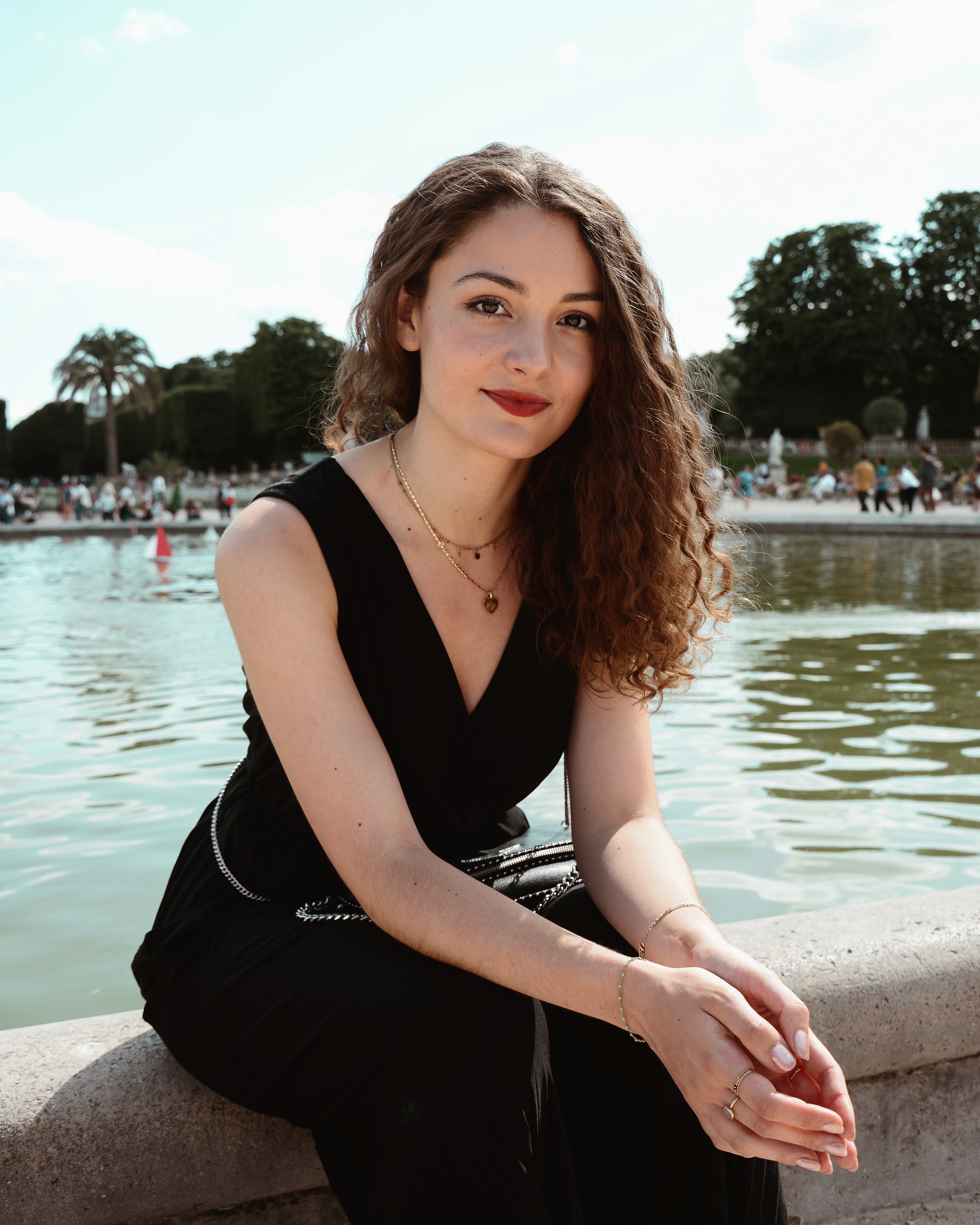
Charlene Etienne, the Marketing Lead at CORPUS sat down with Ground’s Kat Garcia to discuss her journey from global luxury beauty houses like L’Oréal and LVMH to leading marketing for a modern, design-first clean beauty brand. She shares how her luxury background shaped her approach to brand storytelling, why curiosity and creative experimentation are essential in an AI-driven world, and how CORPUS uses AI as leverage to operate efficiently as a small but mighty team. The conversation explores the future of beauty marketing, hyper-personalization, and why human taste and intuition remain critical as AI reshapes how consumers discover and connect with brands.
G: You’ve had such a unique path, from luxury beauty at L’Oréal and LVMH to now leading marketing for a modern, design-led brand like CORPUS. Looking back, what parts of your past career prepared you most for the work you do today?
C: Working for large luxury beauty groups taught me the core foundations I still rely on today: rigor, precision, an obsession with detail, and the codes of luxury. You don’t market a luxury product the way you market a mass one: everything is intentional, sensorial, and narrative-driven. Those years shaped how I think about brand storytelling, long-term equity, and creating elevated product experiences.
At the same time, working in such structured organizations made me realize how much I needed to see my direct impact on a brand. Moving into smaller environments pushed me to become both the strategist and the operator. It taught me agility, resourcefulness, and a much deeper connection to the consumer.
CORPUS sits exactly at the intersection of those two worlds. It’s clean, design-led, and premium, yet entrepreneurial and fast-moving. Even with smaller budgets, we still aim for elevated sensoriality and refined storytelling, which is where my luxury background becomes invaluable. And because I’ve always been passionate about clean beauty (I was making homemade cosmetics as a teenager) joining a brand that blends luxury cues with sustainability felt completely natural. It’s the place where all the parts of my past experience come together.
G: Marketing has shifted so much in the last 18 to 24 months. What skills do you think today’s marketers, especially in beauty, need to stay relevant in an AI-driven world? And which of those skills have been most transformative in your own career?
C: There’s a lot of conversation about AI “replacing” jobs, especially in marketing, but I don’t see it that way. I think the marketers who thrive in an AI-driven world will be the ones who treat AI as a skillset rather than a threat. For today’s beauty marketers, three skills feel essential: curiosity, critical thinking, and creative experimentation.
Curiosity because AI is evolving incredibly fast. You need to be an early adopter, test new tools, and stay informed. Critical thinking because AI has a tendency to always agree with you, so you still need human judgment to challenge outputs, interpret data, and make strategic decisions. And creative experimentation because AI can massively expand your ideation capacity, but you still need good human intuition to refine the direction.
AI hasn’t replaced our brains, it enhances them. I use it as a personal assistant to stay organized, manage time, and remove cognitive load. Platforms like ShopMy, which apply AI to influencer sourcing and gifting automation, save hours of work and allow me to focus on strategy. And even as a beauty consumer myself, seeing how AI can generate hyper-personalized recommendations made me realize how quickly discovery behavior is shifting.
For me, the most transformative skill has simply been learning how to integrate AI into my workflow in a way that multiplies my creativity and my efficiency. It’s the combination of intuition and technology that unlocks the most value.
G: Can you walk us through how you personally use AI day to day at CORPUS? Whether it is creative work, campaign planning, or managing a lean team, what does AI look like in your workflow, and what has surprised you the most about how it unlocks your creativity?
C: On the creative side, AI helps me with concept ideation, exploring messaging variations, and testing multiple angles quickly. For a lean team, generating a breadth of ideas in minutes is incredibly powerful. We can now use AI tools to turn images into videos or produce variations of a creative, tasks that previously required real production resources.
Operationally, AI functions as my personal assistant. I share my to-do lists, use it to prioritize my week, and rely on it to reduce cognitive load, which is essential when you manage a full marketing scope with a small team. We also use AI-driven platforms like ShopMy to help with influencer sourcing and gifting, work that could easily have been a full-time job.
What has surprised me most is how much AI expands creativity. I always start with my own ideas and then pressure-test them with AI to push them further. At the same time, I’ve noticed that as more brands use similar tools, messaging can start to sound homogeneous. It’s a reminder that you can’t become lazy and outsource everything, as in an AI-driven world, the human touch becomes even more valuable. Taste, intuition, and brand understanding are what ensure that AI enhances your creativity rather than dilutes your brand’s identity.
G: CORPUS has always been a design-first and modern brand. What made you lean into AI early, and how have tools like Ground AI helped you unlock revenue or operate more efficiently as a small but mighty team?
C: As a team, we’re all naturally curious, and we saw early on how AI was reshaping consumer discovery, not just through tools like ChatGPT, but across every platform. We’re entering a post–search-engine era where consumers increasingly ask AI what to buy instead of searching manually, which fundamentally changes how brands need to think about visibility and relevance.
We were also seeing major algorithmic shifts in paid media, like Meta Ads’ Andromeda update, which relies on deep learning to match the right creative to the right person in real time. Operating in that environment requires brands to produce more variations, test faster, and iterate with far more agility.
This is where Ground AI has been incredibly valuable. It helps us amplify what already exists: our flows, pop-ups and creative assets by making sure we deliver the right message to the right customer at the right moment. It surfaces opportunities we might have missed manually and allows us to scale like a much larger team.
At its core, AI gives us leverage. For a small but ambitious brand, that’s one of the most powerful advantages we can have.
G: When you think about the future of AI in beauty, not just as a buzzword but as a real shift in how brands grow, what excites you most? And where do you feel the biggest untapped opportunities still are?
C: What excites me most about the future of AI in beauty is the shift toward true hyper-personalization. Back at YSL Beauty, I saw early versions of this with Rouge Sur Mesure, where consumers could create custom lipstick shades powered by AI. Today, that level of personalization is accelerating across every touchpoint: diagnostic tools, online questionnaires, in-store phygital activations, and even the way platforms recommend creator content.
AI is also fundamentally reshaping product discovery. Whether it’s TikTok’s algorithm, LLMs, or new search behaviors, consumers increasingly turn to AI as a trusted advisor (which also comes with a lot of risks as a society, but that’s a whole other conversation). That shift forces brands to be much clearer about their formulas, their claims, and their differentiation.
For brands, I think the biggest untapped opportunity lies in predictive behavior and creative intelligence. Understanding not just what resonates now, but what will resonate next. Indie brands stand to benefit tremendously because AI democratizes access to insights, scale, and creative iteration that once required much bigger teams and budgets.
We’re only at the beginning of seeing how AI will transform beauty, both digitally and in physical spaces, and how deeply it will blend technological intelligence with sensorial, emotional brand experiences. Maybe LLMs will become the next major advertising platforms like Google or Meta Ads, who knows? I find it pretty exciting.